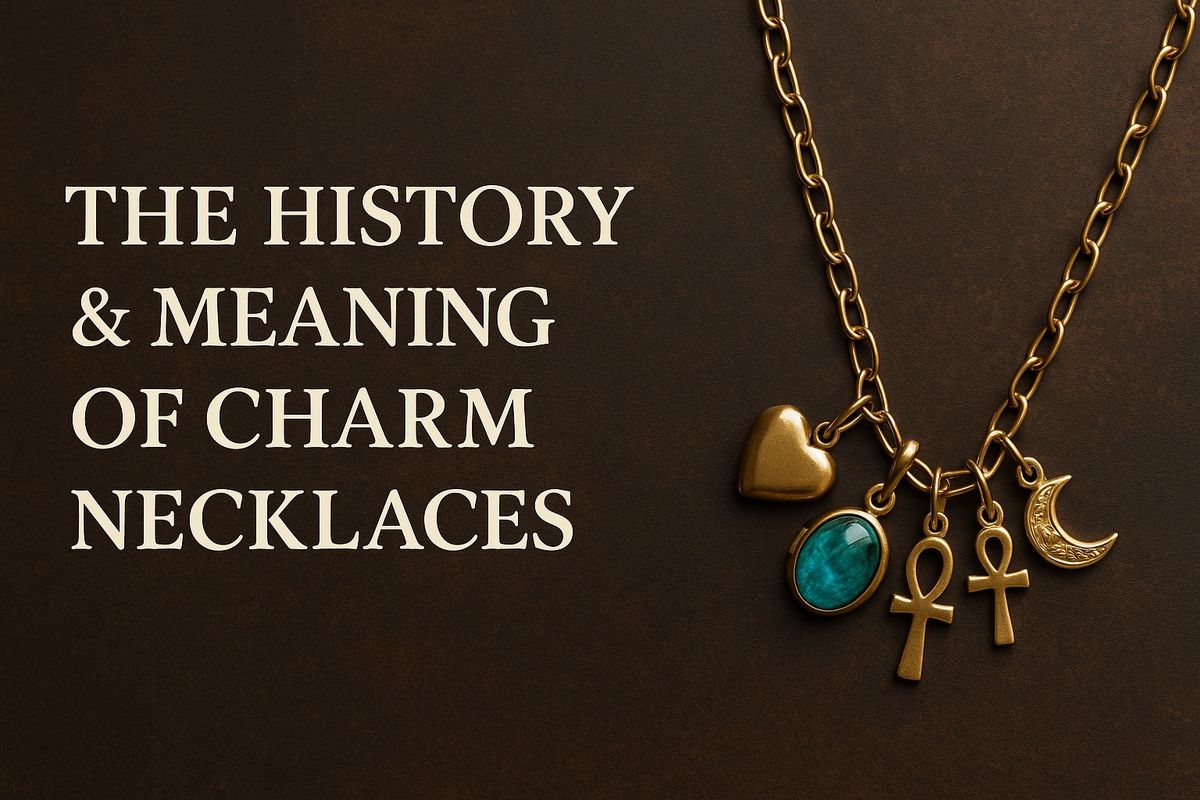
Charm necklaces aren’t just pretty pieces of jewelry. They’re time capsules. Worn stories. Tiny symbols carrying big meaning. From ancient amulets to modern-day personalized pieces, charm necklaces have traveled centuries—changing shape, meaning, and purpose along the way.
In this article, we’ll explore how charm necklaces evolved over time, and why they’ve remained one of the most enduring forms of personal expression.
📜 Quick Timeline: The Evolution of Charm Jewelry
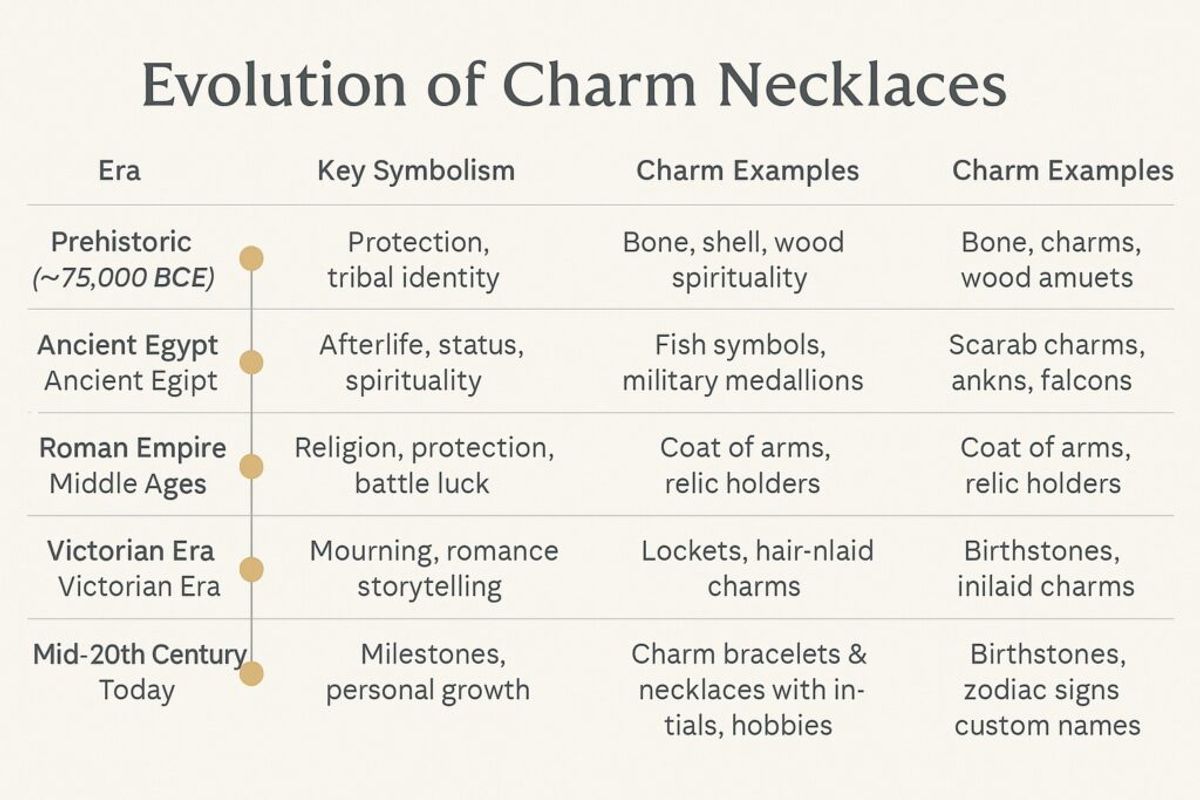
EraKey SymbolismCharm ExamplesPrehistoric (~75,000 BCE)Protection, tribal identityBone, shell, wood amuletsAncient EgyptAfterlife, status, spiritualityScarab charms, ankhs, falconsRoman EmpireReligion, protection, battle luckFish symbols, military medallionsMiddle AgesFaith, family lineageCoat of arms, relic holdersVictorian EraMourning, romance, storytellingLockets, hair-inlaid charmsMid-20th CenturyMilestones, personal growthCharm bracelets & necklaces with initials, hobbiesTodayIdentity, spirituality, styleBirthstones, zodiac signs, custom names
🪬 Ancient Origins of Charm Necklaces
Long before they sparkled in shop windows, charms were something sacred. Early humans carved small objects—teeth, shells, bones—and strung them together to protect against danger or honor the spirit world. These were the earliest charm necklaces. Raw. Powerful. Personal.
In Ancient Egypt, charms evolved into gold and lapis amulets—worn close to the heart. Scarabs for rebirth, ankhs for eternal life, falcons for the sky god Horus. Charm necklaces weren’t fashion. They were spiritual armor.
Fast forward to Ancient Rome, and charms became more personal—tiny fish symbols for early Christians, or lucky tokens for soldiers headed to war. Necklaces held meaning, but they also whispered secrets. To wear a charm was to wear a belief.
“Charms weren’t decorations. They were messages, prayers, and power made wearable.” – Museum of Ancient Adornment
👑 The Royal Era: Queen Victoria & the Rise of Sentiment
If there’s one woman who transformed charm jewelry forever, it’s Queen Victoria. In the mid-1800s, she turned mourning into fashion. After Prince Albert’s death, she began wearing lockets and bracelets filled with his hair, his portrait, even miniature poems.
The public followed. Charm necklaces became love letters made of gold. Each one told a story—a romantic timeline worn around the neck.
These pieces weren’t just pretty. They were emotional records. A baby’s birth. A spouse’s passing. A secret lover. And they weren’t cheap either—charm necklaces were crafted in precious metals, studded with pearls and tiny inscriptions.
💡 Feature Snippet: What is the history of charm necklaces?
Charm necklaces originated as protective amulets in prehistoric times, evolved into religious and symbolic pieces in ancient civilizations, and became sentimental keepsakes during the Victorian era—often used to commemorate love, loss, or legacy.
🎉 20th Century Boom: From Keepsakes to Culture
After World War II, charm jewelry exploded in popularity, especially in America. Soldiers returning home brought silver and gold trinkets for loved ones—tiny Eiffel Towers, military medals, or initials. These weren’t just souvenirs—they were wearable memory books.
By the 1950s and 60s, companies like Tiffany & Co. began producing charm collections, making it fashionable to build your own story, one piece at a time. Birthdays, graduations, first loves—they all had a charm.
And while bracelets were the dominant format, charm necklaces weren’t far behind—especially for dressy events, religious confirmations, and gifts of significance. Charm necklaces had become universal: a teenage girl in Brooklyn and a duchess in London might both wear one—for different reasons, but the same message.
💬 Symbolism and Meaning: Why We Still Wear Charms Today
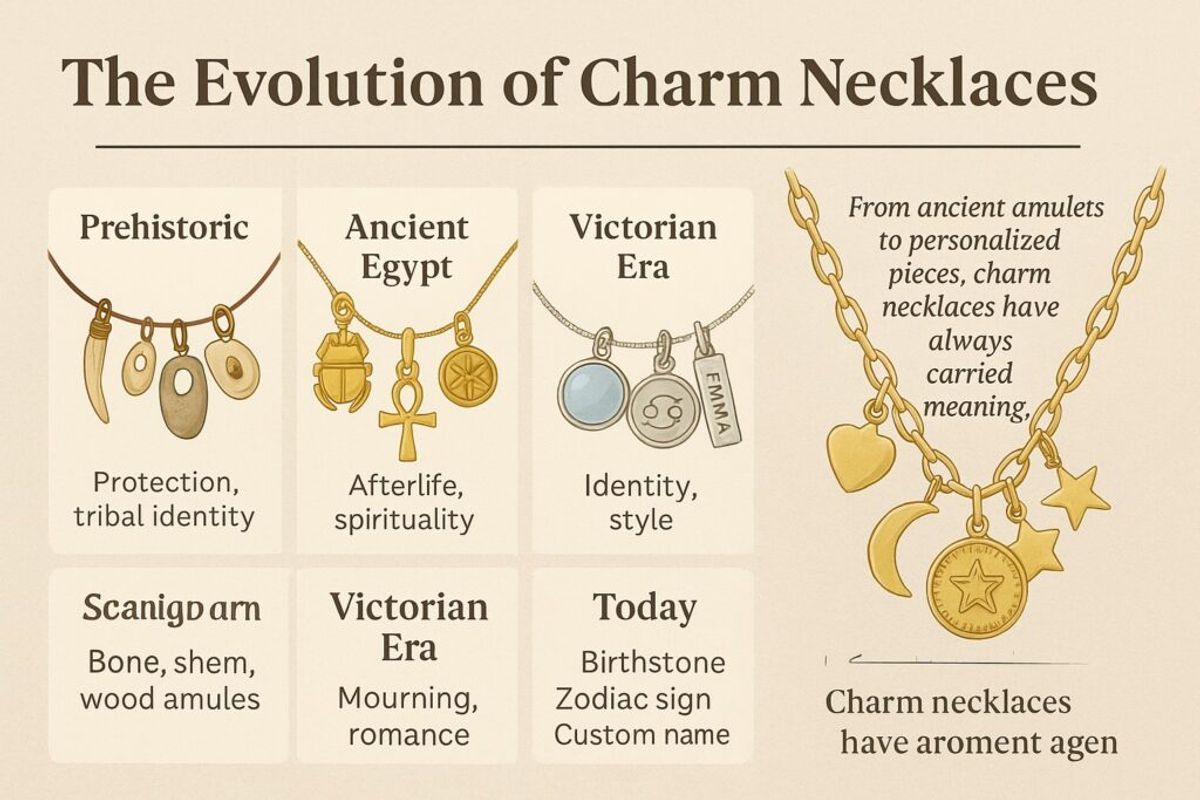
Fast forward to today—and charm necklaces are having a moment again. But now? They’re even more personal. Charms don’t just mark moments. They reveal identities.
From zodiac signs and birthstones to engraved initials, spiritual symbols, affirmations, and minimalist icons—each charm tells part of your story. One that’s evolving. One that matters.
- Love & Romance: Hearts, lockets, initials of partners
- Faith & Belief: Crosses, hamsas, evil eyes, lotus flowers
- Protection: Moon phases, guardian angels, arrows
- Legacy: Engraved names, ancestral coins, coordinates
In a world of mass production, a charm necklace is a protest of sorts. A whisper of “this is who I am.” And the beauty? You can add to it forever. One milestone at a time.
🧿 What does a charm necklace symbolize?
A charm necklace symbolizes the story of the wearer—capturing moments, values, memories, and beliefs in symbolic form. Each charm adds a new chapter, making the necklace deeply personal and emotionally significant.
🪄 Personalized Charm Necklaces: Jewelry That Speaks for You
Today’s charm necklaces are less about fashion, more about feeling. With the rise of custom jewelry, personalization has taken center stage. From nameplates and initials to coordinates of special places or charms representing inside jokes—no two charm necklaces are the same anymore.
It’s not just about what looks good. It’s about what means something. A charm necklace becomes a wearable diary, constantly in progress.
🛠️ Popular Personalization Trends
- Engraved Charms: Names, initials, quotes, or even short mantras (“breathe,” “be still”).
- Birthstones: Family pieces that reflect loved ones or lineage.
- Zodiac Signs: A nod to cosmic identity—subtle, symbolic, and stylish.
- Lockets: Miniature photos, pressed flowers, or fingerprints inside.
- Travel Coordinates: Marking life-changing destinations, proposals, or dream spots.
Want to tell your story? Start small. Pick a base chain and one charm that matters. Add to it as you grow, love, move, heal, or remember.
💡 Styling Snippet: How to wear a charm necklace?
Style Tip: Layer your charm necklace with simple chains or chokers. Keep it central to your outfit—emotionally and visually. Don’t be afraid to mix metals or meanings.
🌍 Cross-Cultural Symbolism of Charm Necklaces
Across the globe, charms take on wildly different forms—but they all carry deep meaning.
CultureCommon CharmMeaningEgyptianScarab BeetleRebirth, protection in the afterlifeChineseLock CharmsChild safety, health, long lifeItalianHorns (Cornicello)Luck, warding off evilChristianIchthys (Fish)Faith, early symbol of ChristianityHinduOm SymbolSpiritual awakening, oneness
When you wear a charm necklace, you’re not just wearing a piece of jewelry—you’re participating in a legacy of belief, tradition, and symbolism that spans generations and continents.
👗 How to Style and Gift Charm Necklaces
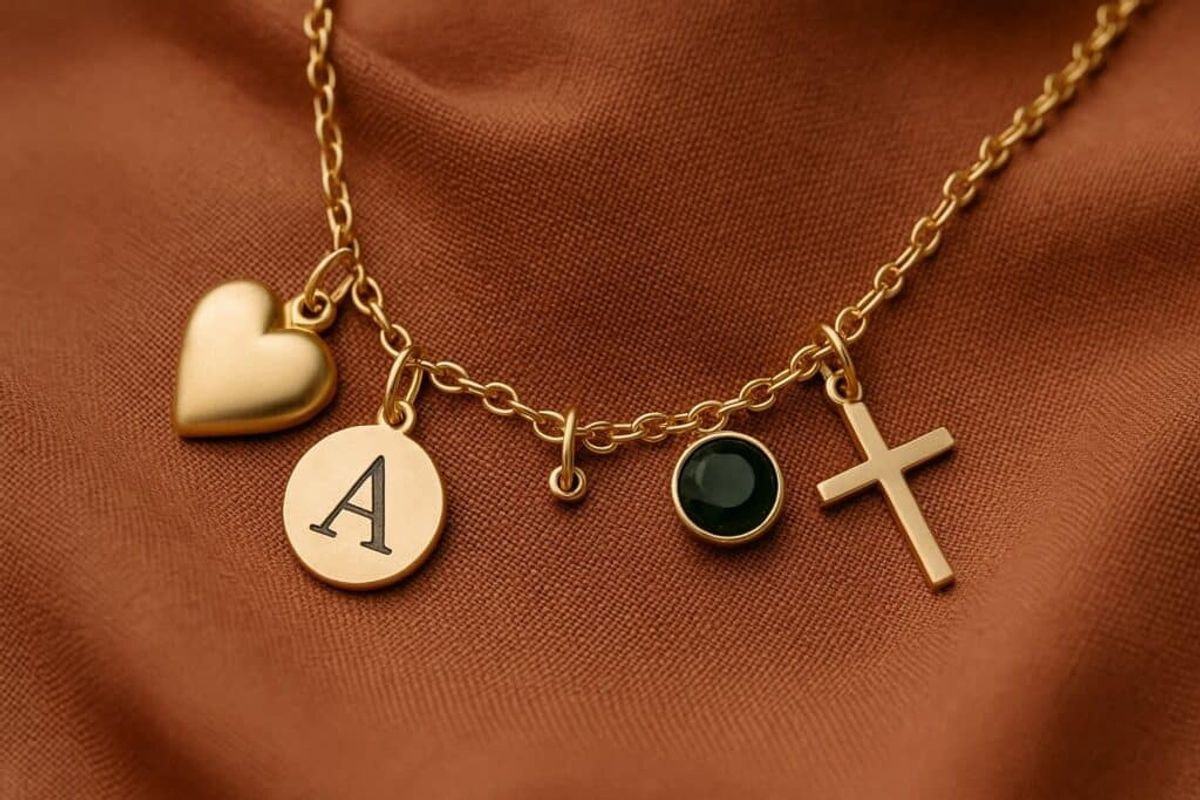
Charm necklaces are versatile, and with the right touch, they become instant statement pieces. Here’s how to wear and share them:
✨ Styling Ideas
- Layered Looks: Pair your charm necklace with shorter chains, chokers, or long pendants.
- Statement Solo: Let a bold charm shine by wearing it alone on a chunky gold or silver chain.
- Mixed Metals: Don’t stress over gold vs silver—modern charm styling embraces contrast.
- Charms on Hoops: Repurpose necklace charms as earrings or even anklet add-ons.
🎁 Charm Gifting Tips
- Choose a charm that marks a shared memory or inside story.
- Add an engraving for extra personalization (dates, names, quotes).
- Include a card explaining what the charm represents—it makes the gift even more meaningful.
A charm necklace gifted with heart becomes more than a present. It becomes a keepsake. A message someone can wear forever.
❓ Frequently Asked Questions
What does a charm necklace symbolize?
A: Charm necklaces symbolize personal stories, values, milestones, and beliefs. Each charm adds a layer of meaning unique to the wearer.
What’s the difference between a charm bracelet and charm necklace?
A: Both tell stories through symbolic pieces. Bracelets are more casual and often filled with smaller charms. Necklaces allow larger, statement charms and sit close to the heart—literally and symbolically.
Can I make my own charm necklace?
A: Absolutely. Start with a quality chain, choose a bail or clasp that allows swapping, and build your collection one charm at a time. Many brands now offer DIY charm bars in-store or online.
Is there a spiritual meaning behind charms?
A: Yes. Across history, charms have been used for protection, spiritual connection, faith symbols, and emotional healing. Many still wear specific charms for energy, grounding, or spiritual balance.
💖 Final Thoughts: A Necklace That Speaks Without Words
Charm necklaces aren’t just trends. They’re traditions. They’re talismans. They’re tiny windows into who we are, where we’ve been, and what we care about most. In a world that moves fast and forgets easily, a charm necklace remembers for us. One symbol at a time.
Whether passed down, handmade, or gifted with meaning, these necklaces do more than decorate the body—they reflect the soul.
So start your story. Pick a charm. Add another. And another. Because some stories deserve to be worn, not just told.