
Understanding Geographical Coordinates: Reading and Writing Geographical Coordinates
The World of Coordinates
In today's digital era, it is easier than ever to know where we are. With map apps, GPS, and navigation devices, we can know where we are right now and where our destinations are right away. Whether we are driving through a foreign city, geo-tagging our photos, or marking our favorite spot on a map, there is one fundamental concept behind all of these things—coordinates.
But what actually are coordinates? How do they work, and how do you actually write them? While most of us outsource the nitty-gritty of navigating to apps, knowing your coordinates can be very useful to travellers, researchers, outdoor enthusiasts, and even individuals who have them engraved on souvenirs.
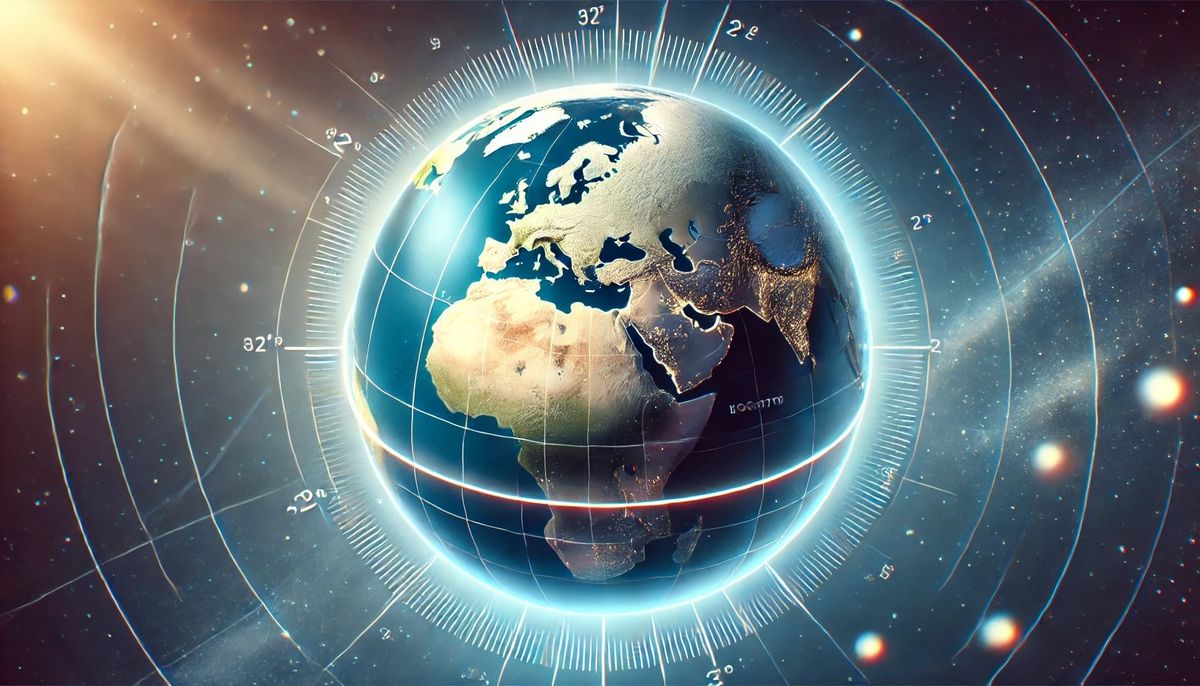
In this guide, we will talk about everything there is to learn regarding geographical coordinates, including what they are, how to write and interpret them, to how to apply them to real life situations.
What Are Coordinates?
At their most basic, coordinates are numerical values that define a point of place within a defined space. When referring to navigation or geography, they define a point’s exact spot on Earth, most often using latitude and longitude.
If you have learned math lessons in school, you may remember the Cartesian coordinate system, where there is an X axis and a Y axis that is utilized to determine locations on a plane. While conceptually identical, geographical coordinates use a unique system—one that is structured on a spherical model of the globe rather than on a plane.
To fully understand coordinates, one must have latitude and longitude, the most critical parameters that determine where on the globe a point is located.
Latitude: Measuring North and South
What is latitude?
Latitude refers to how far north or south of the Earth's equator that a point is situated. It is represented by degrees (°), where the reference point is 0° on the equator.
- The North Pole is situated at 90° North (90° N)
- The South Pole is situated at 90° South (90° S)
- Any point that falls within will have its latitude value between 0° and 90°
Imagine slicing our globe around our home horizontally into parallel rings—these are lines of latitude, or parallels. The point is closer to the equator, the lower its latitude value is.
Notable latitude lines
- Equator (0° Latitude): It divides the globe into Northern and Southern Hemispheres
- Tropic of Cancer (23.5° N): The most northerly latitude on which the sun is visible overhead
- Tropic of Capricorn (23.5° S): The most distant latitude on which the sun is visible overhead
- Arctic Circle (66.5° N): Marks the edge of polar regions of the Northern Hemisphere
- Antarctic Circle (66.5° S): Marks the edge of Southern Hemisphere polar regions
Longitude: East and West Measurement
What is Longitude?
Longitude determines how far east or west that point is from the Prime Meridian, i.e., an imaginary line running vertically through Greenwich, London.
- The Prime Meridian is the reference point of 0° of longitude
- Longitude values range between 0° to 180° East (E) and between 0° to 180° West (W)
- Unlike latitude, however, longitude lines—meridians—converge on the poles
Notable Longitude Meridians
- Prime Meridian (0° Longitude): It divides the globe into Eastern and Western Hemispheres
- International Date Line (180° Longitude): The point where the calendar day changes when crossed
Longitude plays an important part in time zones. Because the Earth makes one full turn of 360° within 24 hours, each 15° of longitude corresponds to one hour of difference of local time.

How to Interpret Longitude and Latitude Coordinates
If you’ve ever taken a look at GPS coordinates, you’ll have noticed that they’re displayed in a specific format, likely using degrees (°), minutes (′), and seconds (″). The format is structured like this:
degrees minutes seconds
latitude
longitude
Example Coordinate:
20°45′13″ N, 105°55′43″ E
- Identify Longitude and Latitude:
- The first value (20°45′13″ N) is latitude
- The second coordinate (105°55′43″ East) is longitude - Break Down the Values:
- Degrees (°): The basic measuring unit (e.g., 20° and 105°)
- Minutes (′): Degrees that are subdivided into smaller units (e.g., 45′ and 55′)
- Seconds (″): The most minute subdivision (e.g., 13″ and 43″)
- N/S or E/W: Assign hemisphere (N/S for latitude, or E/W for longitude) - Convert to Decimal Representation (Optional):
Some maps and global positioning devices use decimal degrees instead of degrees, minutes, and seconds (DMS). The conversion formula is:
Decimal Degrees = Degrees + Minutes/60 + Seconds/3600
Example: 20°45′13″ N → 20 + 45/60 + 13/3600 = 20.7536° N
Similarly, 105°55′43″ E is converted to 105.9286° E
How to Write Coordinates Correctly
Writing coordinates is critical, where one small mistake can point to a completely different point. Some of the most critical rules to remember are:
- ✅ Latitude is listed first, followed by longitude
- ✅ Include appropriate symbols (°, ′, ″)
- ✅ Use hemisphere indicator where appropriate (N/E)
- ✅ Ensure that latitude values never pass 90° and that longitude never passes 180°
- ✅ Avoid losing track of decimal points using decimal coordinate notation
Example Formats:
- Degrees, Minutes, Seconds (DMS): 48°51′29″ N, 2°17′40″ E (Eiffel Tower)
- Decimal Degrees (DD): 48.8581° N, 2.2944° E

The Definition of Jewelry Coordinates
Coordinates are also engraved on items of jewelry as a sentimental gesture of indicating important locations. Whether on a engraved ring, personalized necklace, or custom bracelet, coordinates can signify:
- A birthplace or home town
- The location of a first date, proposal, or wedding
- A dream vacation destination
- The location of a personal achievement
Tip: Avoid marking personal locations (e.g., home addresses) out of safety reasons, as whoever is able to read coordinates can pinpoint the exact spot.
Practical Applications of Coordinates
Understanding how to interpret and write coordinates is useful in numerous real life situations:
- Travel & Navigation: Helps locate areas where there is poor reception of GPS
- Emergency Scenarios: Enabling exact locations to be sent in remote areas
- Outdoor Adventures: For hikes, camping, and geocaching
- Cartography & Surveying: Critical to map making and measuring land
- Astronomy: Coordinates help track celestial objects
Why Understanding Coordinates Matters
While modern technology makes it convenient to move around, knowing how to calculate and write out latitude and longitude is never out of date. Whether labeling a sentimental location on jewelry, using GPS on hikes, or just curious how map systems operate, knowing latitude and longitude makes you master of greater geo awareness. So next time that you come across a set of coordinates, do not scan through them hurriedly—slowly interpret what they mean and appreciate how much specificity they have in mapping our world!